
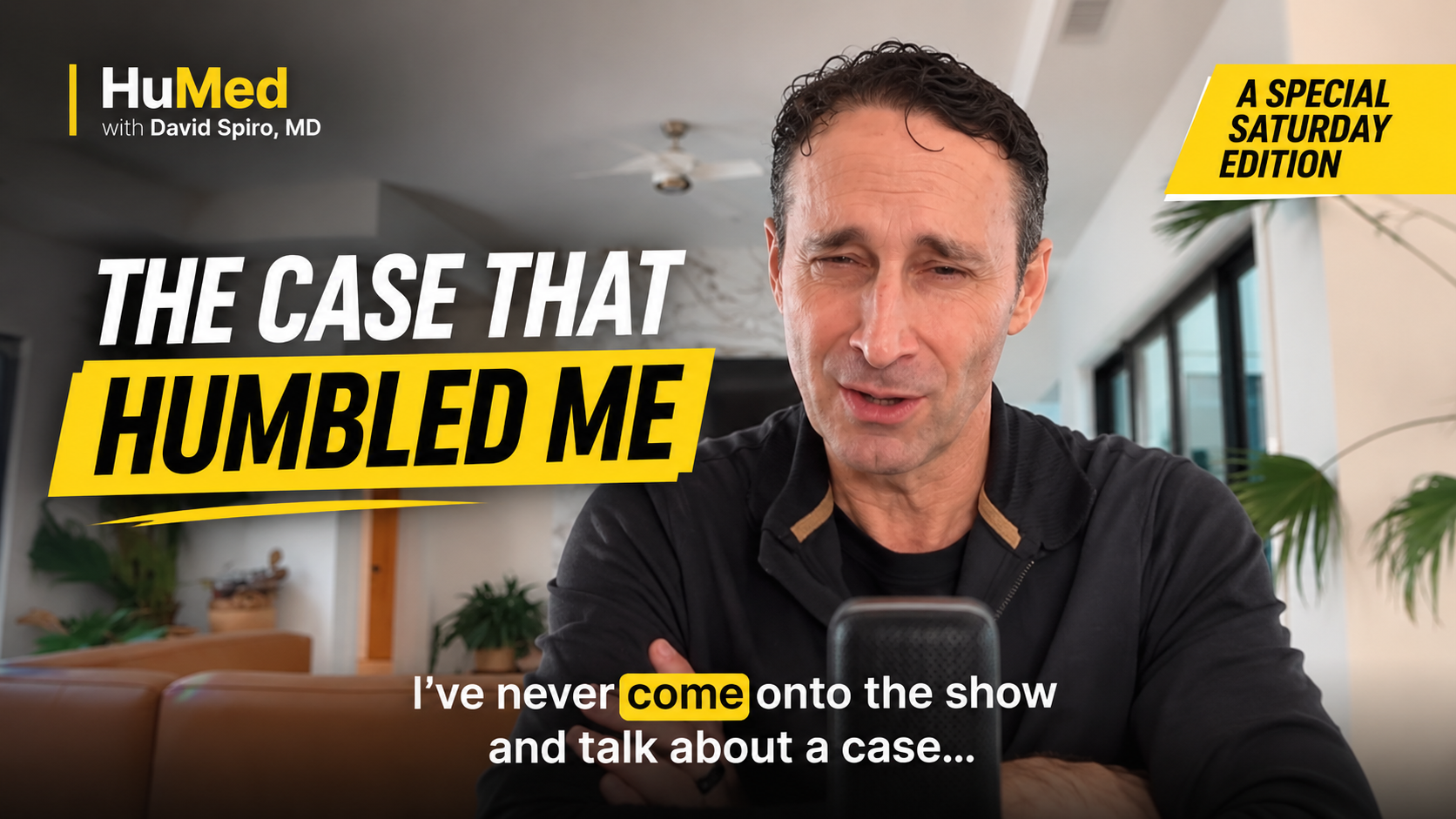
For 72 episodes, my guests have done the hard part. They have sat down at the mic and told me about the cases that stayed with them. For this special Saturday release, I turned the mic around. This is the case that has stayed with me for about 30 years: a child with a fever and a rash I sent home from clinic, and the phone call a few hours later that changed how I think about being a doctor.
A few moments from behind the scenes:
No guest this time. Just me and the mic. I have been vulnerable with guests before, but I had never come on the show and told a case of my own.
A different era. This was before the varicella vaccine, when we saw chickenpox all the time. The rash looked like chickenpox. The child looked well, had a normal heart rate and was smiling at me. I suggested ibuprofen and Benadryl for the itch and sent the family home.
Five words that still drop my stomach. In emergency medicine, a colleague will walk up and start with, “Hey, do you remember that kid?” Decades later, that sentence still lands in the pit of my stomach.
The story at the heart of the episode
A few hours after clinic, the family called. The child looked ill and had purple spots. I was immediately worried about meningococcemia, a bacterial infection that can move very fast, kill a child, or leave severe, disfiguring injuries. I asked the family to meet me in the emergency department. That is what it was.
The child was very sick that day and needed fluids, medicine to hold the blood pressure up, and a transfer to a larger children’s hospital. All of that was done, and the child survived. Afterward I went to visit in the hospital, hours and hours away.
What I understand now: early meningococcemia can look nonspecific. The classic purple rash that doesn’t blanch when you press it (petechiae) doesn’t always appear right away, and early on it can look like an ordinary viral rash. Disease is a process. It starts out looking like one thing and often ends up looking like something else.
Why this is the human side of medicine
Knowing the medicine didn’t help much at the time. I felt shame. I replayed the case over and over, asking what I could have done differently, and for weeks and months I doubted myself and felt anxious taking care of kids. I talked about it with my wife, and a bit with my partner, but mostly I sat with it. Twenty-five or thirty years ago, that was the expected thing.
Decades ago, Dr. Albert Wu introduced a term for this: the second victim. Clinicians are affected by errors too, often in silence.
Then I saw the family again. I didn’t know how they would react to me. They were so happy to see me, and they felt I had saved their child’s life. My reflection was that maybe I had been a little too hard on myself.
Today I’m section chief of a large pediatric emergency department, supporting about 35 to 40 people. The lesson I carry into that role is that we need an environment where people feel comfortable talking about their cases. We are going to miss things, because we are human.
One line to take with you
“We make errors and we need to own up to it, learn from it, grow from it personally and professionally.”
A couple of weeks ago, Dr. Vass told us on the show that community is the core of happiness and longevity. I’d argue it is also the core of being a happy, successful clinician. Find your people: colleagues, friends, family and loved ones you can talk to when a case doesn’t go well.
Watch the full episode on YouTube, or listen on Apple Podcasts.