
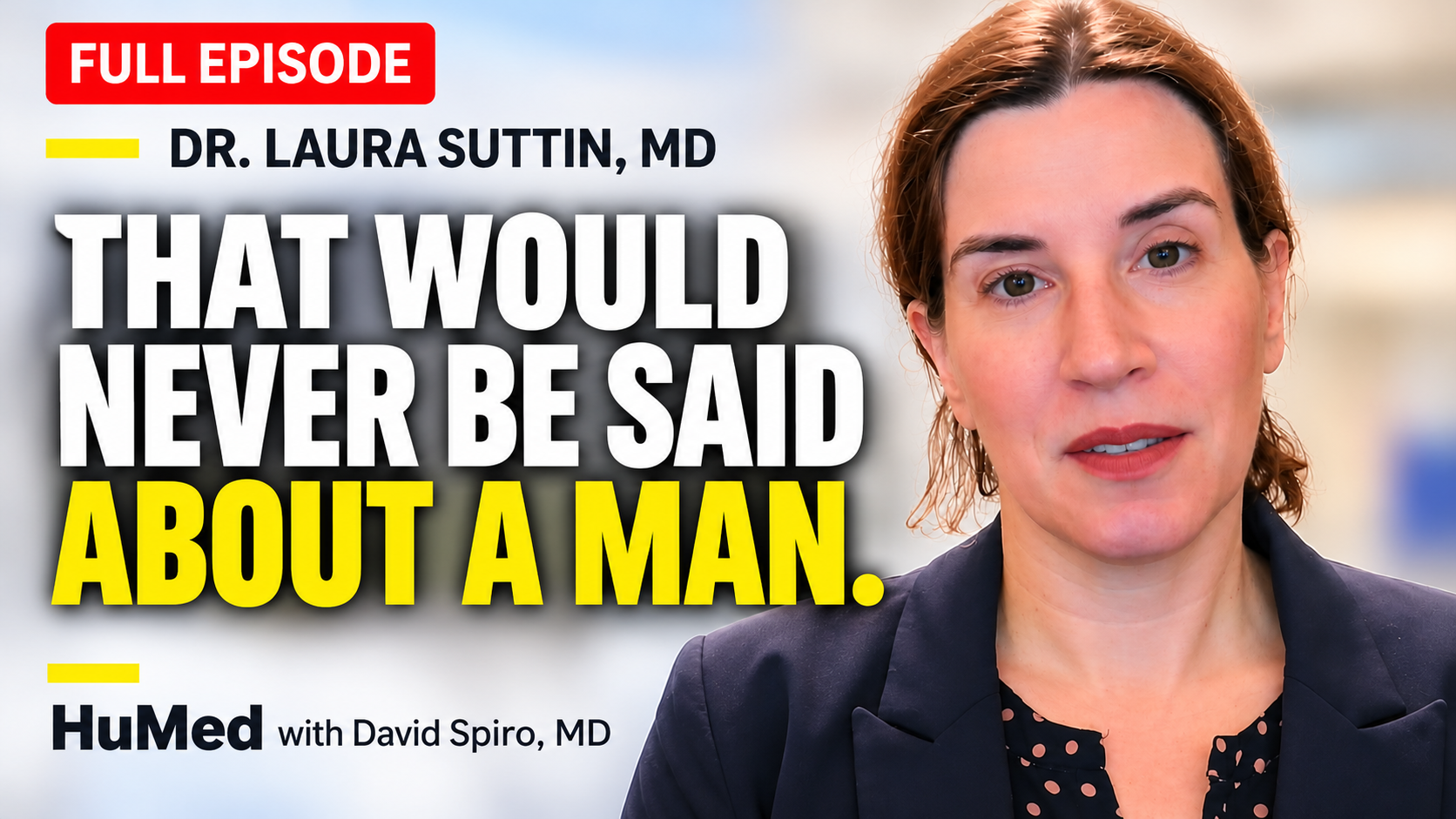
Laura Suttin is a board-certified family physician, a certified coach, an author and a speaker who calls herself a clinician retention architect. She was tapped for leadership early in her career without any training to go with it, so she went back for her MBA and became a coach. Today she helps health systems build leaders who keep their best clinicians. She created the Clinician Leadership Compass and hosts the podcast Designing Healthcare That Cares. This conversation is about what happens when we promote great clinicians into leadership and never teach them how to lead.
A few moments from behind the scenes:
She interviewed me first. Before Laura came on HuMed, I was a guest on her show. It was a pleasure to return the favor and turn the microphone around.
Meet Gigi. I found out from Laura’s newsletter that she just became a grandmother, and the grandkids call her Gigi. “We’re obsessed,” she told me.
Five minutes in the car. Laura’s best leadership tool costs nothing. Before a hard conversation, she gets to work ten minutes early and does deep breathing in her car for five minutes before she walks into the building.
A paradox I keep thinking about. When I shared a mentor’s advice, “You can’t take this personally,” Laura put it this way: it’s not about us, but it’s all about us. We can only be there for someone else once we have calmed our own nervous system.
The story at the heart of the episode
Laura was a brand-new medical director, now supervising physicians and APPs who had been her peers. One of her first tasks was a corrective conversation with a clinician that other leaders had already tried and failed to have. She sat across from this person in a windowless room. All she could hear was her own heart pounding. The clinician said, “I’m offended,” and walked out.
Years later, she doesn’t remember what the feedback was about. She remembers how she felt. Her comparison stuck with me: it would be like being told to go attend a vaginal delivery when you had never seen one. We would never do that in clinical medicine, yet we do it to generations of clinician leaders.
The next time she had a conversation like that, she did it differently, with those five minutes of breathing in the car. She walked in grounded and on the other person’s side. It was still a hard conversation, but the relationship got stronger, and the clinician thanked her.
We also talked about the episode’s title moment. In a room full of mostly male physician leaders, a colleague called into a meeting while picking up her kids, and the vibe in the room was that she wasn’t committed. “Things that would never be said about my male colleagues,” Laura said. She writes about moments like this in her book.
Why this is the human side of medicine
Laura spent years thinking she was a terrible leader. The imposter syndrome was heavy, and it made her feel alone. Then she learned it wasn’t her. It was the environment that trained her, and her own leaders, without preparing any of them. Her message to clinician leaders is simple: you’re not alone, what you’re feeling is normal, and these are skills you can learn, just like a central line.
She also named something we are trained out of: saying “I don’t know.” As a medical student, when she said it on rounds, she was sent off to write a paper on the topic. As a leader, she says, you have to be able to say it, then add, “I’ll find out and get back to you.” And listen to your people even when you can’t change the decision. In her words, people will make up wild stories in the absence of information.
My takeaway: how we show up is everything, and it starts with the breath we take before we walk in the door.
Laura’s book is Purposeful MD: Creating the Life You Love Without Guilt, and you can find it on her website, drlaurasuttin.com.
Watch the full conversation on YouTube, or listen on Apple Podcasts.