
Behind the Mic with Dr. Melissa Mondala: “I Did Healing for Myself First”
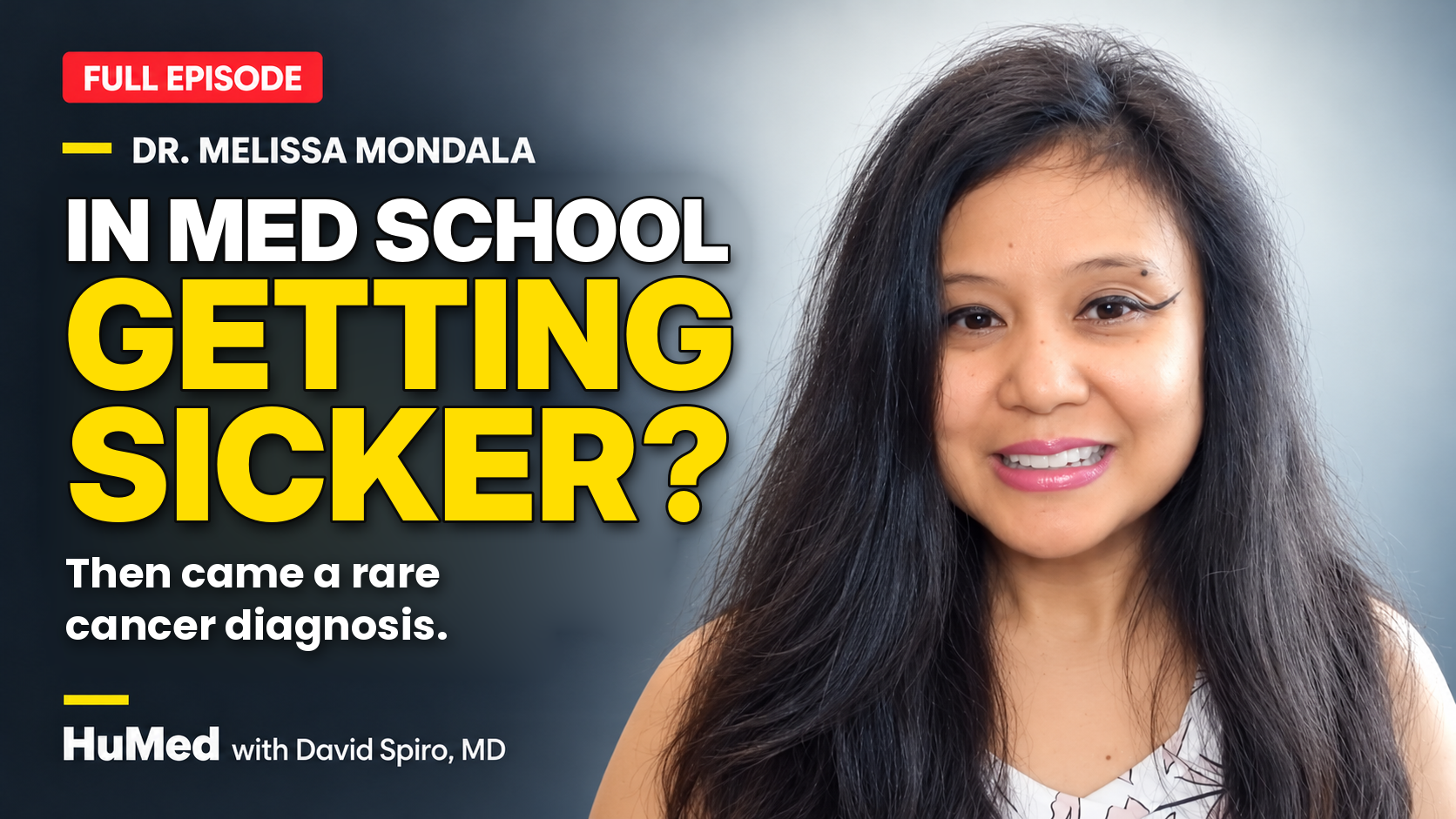
Melissa Mondala is double-boarded in family medicine and lifestyle medicine, and fellowship-trained in integrative psychiatry and integrative medicine. She co-founded the Doctor Lifestyle Clinic, a direct care practice, and wrote Embody Lifestyle Medicine: How to Build a Successful Direct Care Startup. Before she ever practiced lifestyle medicine on patients, she needed it herself.
A few moments from behind the scenes:
She ate like the football players. As a high school cheerleader she figured food was fuel: pizza, burgers, hot Cheetos, Cup of Noodles. She told me it turned out to be her poison. By her teens she was living with IBS and reflux.
Then came a rare cancer diagnosis, in the middle of training. At Loma Linda, one of the Blue Zones, she was diagnosed with an atypical breast cancer. She was studying lifestyle medicine at the time, but she said she didn’t really understand its value until she practiced it on herself. Her husband was dealing with autoimmune disease at the same time. Two young doctors, both sick, asking how that was possible.
Her lunch-break spin instructor was a cancer survivor. At Loma Linda she was surrounded by living proof of what she was studying, including the guy leading her spin class.
I made a confession about sleep. It took me five years after I stopped working overnights to get over my insomnia. And I learned next to nothing about diet or sleep in medical school. Melissa’s training was the same, so during residency she started going to local medical schools to teach nutrition and the microbiome herself.
The kids with constipation. Almost every shift I work, I see a child with constipation, and the diet history is all processed food. We can clean them out in the ER, but if nothing changes at home, they come back. So I asked her what I really wanted to know: how do you change adult behavior? Her answer was refreshingly small. One lifestyle pillar, held for three months. SMART goals. Habit stacking. If you eat dinner at 9 PM, try 8:30. Baby steps.
The story at the heart of the episode
Early in her career, Melissa cared for a young single mother of three, in her late twenties or early thirties, with pancreatic cancer. Most of us hear that diagnosis and brace for the worst. This mom didn’t want to talk about her life being over. She wanted to eat better. She started making smoothies, cut out the sugar and the artificial colorings, and ate more plants. She was a runner, so she kept running, through the fatigue, through the treatment and the surgery.
“I’m still gonna go out there because I have a life to live. I have purpose. I have my children.”
Melissa told me she was speechless.
Why this is the human side of medicine
Nothing about that visit was textbook. Melissa said that in moments like that, what matters is the human connection: seeing past the physical body to the motivation, the purpose and the hope.
She also told me about a fashion designer with an autoimmune disease who cried at visits because she was afraid of every medication. Melissa stayed patient and worked layer by layer. That patient is now doing reformer Pilates several times a week, and she made it to fashion week.
What stayed with me is that her patience with patients started with herself. She was the patient first.
One line to take with you
Her advice to the frustrated, burned-out physician who feels stuck practicing reactive medicine: “I did healing for myself first.” She said that’s what made her a better healer. So many of us need to heal ourselves first in order to be good healers for others, and that’s a big part of why we do this show.
Watch the full conversation on YouTube, or listen on Apple Podcasts.