
Behind the Mic with Dr. Rick Pescatore: “Sounds Exactly Like My Mom”
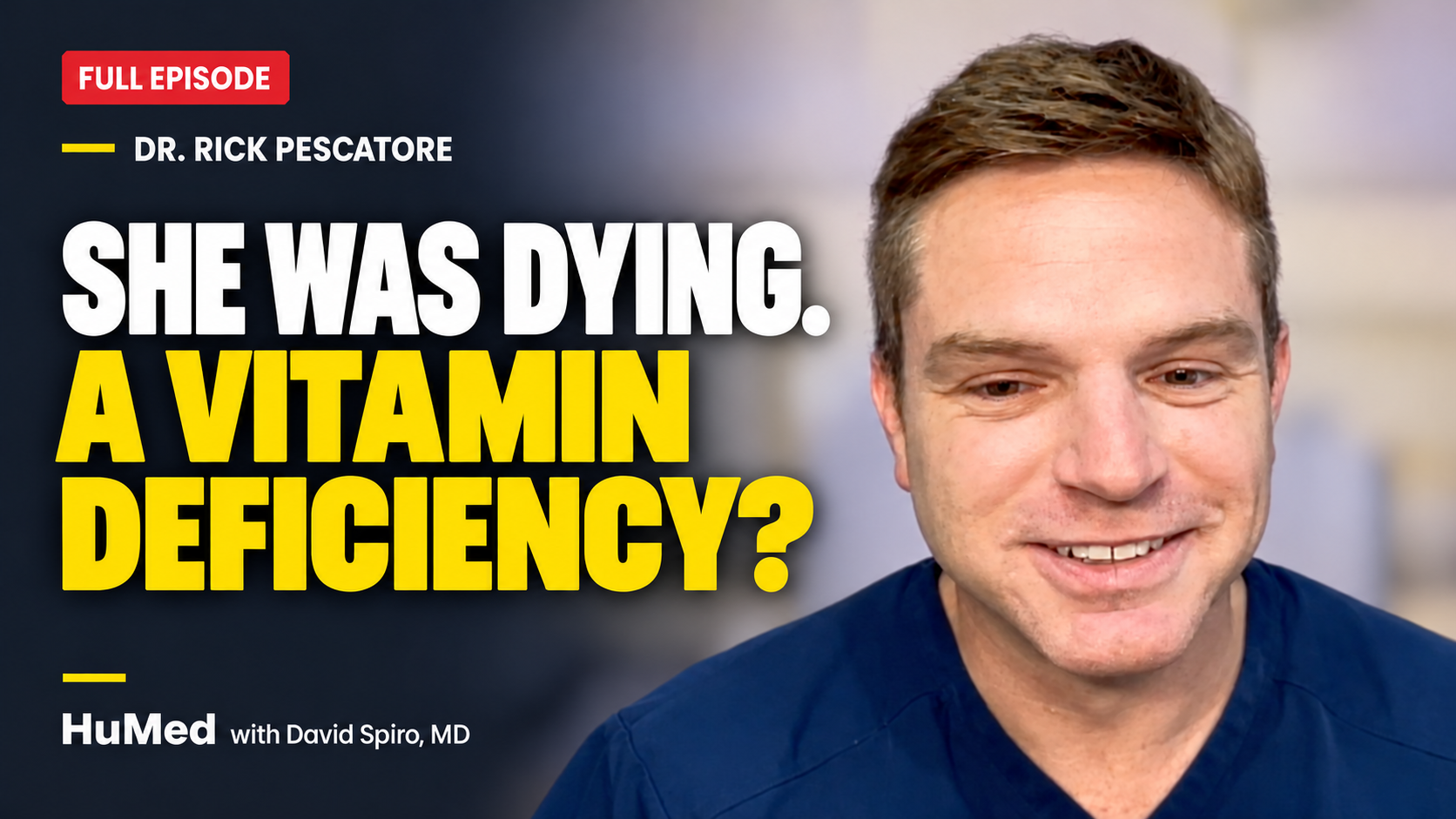
Rick Pescatore is a board-certified emergency physician. His path to medicine ran through the U.S. Naval Academy, aerospace engineering, and the Navy’s submarine force. He served as Delaware’s chief physician during COVID-19, he’s editor-in-chief of Emergency Medicine News, and he still works shifts in a community ED. He also co-founded Belly MD, which takes on the patients medicine tends to set aside: the ones whose tests come back normal but who still don’t feel well.
A few moments from behind the scenes:
I told him he’s smarter than I am. He sees everybody. I only take care of kids.
His Navy call sign was Aquaman. He got to ride in the backseat of F-18s, but he couldn’t keep food down before a flight. So he drank a bunch of water and threw up a bunch of water. He also drove submarines, which he told me he hated.
I had a little epiphany on air about night shifts. In my fifties I started getting real anxiety on the day of a night shift, because I knew what my body would feel like afterward. Now in my sixties, even an evening shift that ends at 10 or 11 takes me two or three days to recover from, and I’m moving toward days. Rick was honest that he burned out of full-time emergency medicine too. His answer to the bigger question was that someone will always need to be standing there at three in the morning, so we should do everything we can to make that more tolerable.
I asked the question some colleagues would ask. An ER doc selling supplements makes some people roll their eyes. Rick said he used to be one of those guys who rolled his eyes. I appreciated that he didn’t dodge it.
The pandemic, from the inside. While he was working in Delaware’s pandemic response, he was also driving up to North Jersey to do shifts as a proceduralist: intubate, central line, intubate, central line. He remembers looking out at rows of patients intubated and proned and thinking it looked like the rows of iron lungs from the polio era. And he remembers the first shipment of vaccine coming off a National Guard truck.
The story at the heart of the episode
Rick met a girl on Hinge. On a drive to Pittsburgh, he was going on about a group of patients he sees in the emergency department all the time: people who come in with pain, nausea and vomiting, get a CT scan and lab work, and get told everything is normal.
She recognized someone. “This person that you’re describing,” she told him, “sounds exactly like my mom.”
Her mom had lived with fatigue, nausea and on-and-off bowel problems for years, and had collected diagnoses along the way. A few weeks after that drive, low potassium led to a dangerous heart rhythm and she was in the hospital. Then came infections and complications, one after another. She ended up in the ICU on pressors, delirious, and nobody could explain why she kept getting worse.
Rick got involved. In his telling, the answer turned out to be a low vitamin B1 (thiamine) level, and treating it helped turn things around. He married that girl from Hinge. Her name is Katie.
It also sent the two of them on a search through history: an old copy of The Lancet in an antique bookstore in Cooperstown, older texts in France, and records in Philadelphia from around World War II. That path is a big part of what became Belly MD.
Why this is the human side of medicine
Every ER doctor knows the patient Rick was describing on that drive. We do the workup, it comes back clean, and we send them home. What stayed with me is how he described where that leaves people: “We tell them that they’re normal, but their lives aren’t.”
He told me that was part of what burned him out. There are only so many times you can tell a woman with crippling abdominal pain, whose life is clearly falling apart, that everything is normal. It took that patient showing up in his own life, as his future mother-in-law, to change what kind of doctor he is. He says it made him a better emergency physician, too.
At the very end, Rick said his understanding of so many things has changed over the years, with human frailty at the top of that list.
One line to take with you
Rick on where our specialty goes from here: “Does emergency medicine exist solely for the shortcomings of the last generation?” Fifty years ago it was the gunshot wounds, heart attacks and strokes falling through the cracks. Today, he says, it’s patients like his mother-in-law.
Watch the full conversation on YouTube, or listen on Apple Podcasts or Spotify.
David