
Behind the Mic with Dr. Kim Blankshain: “What Is Happening?”
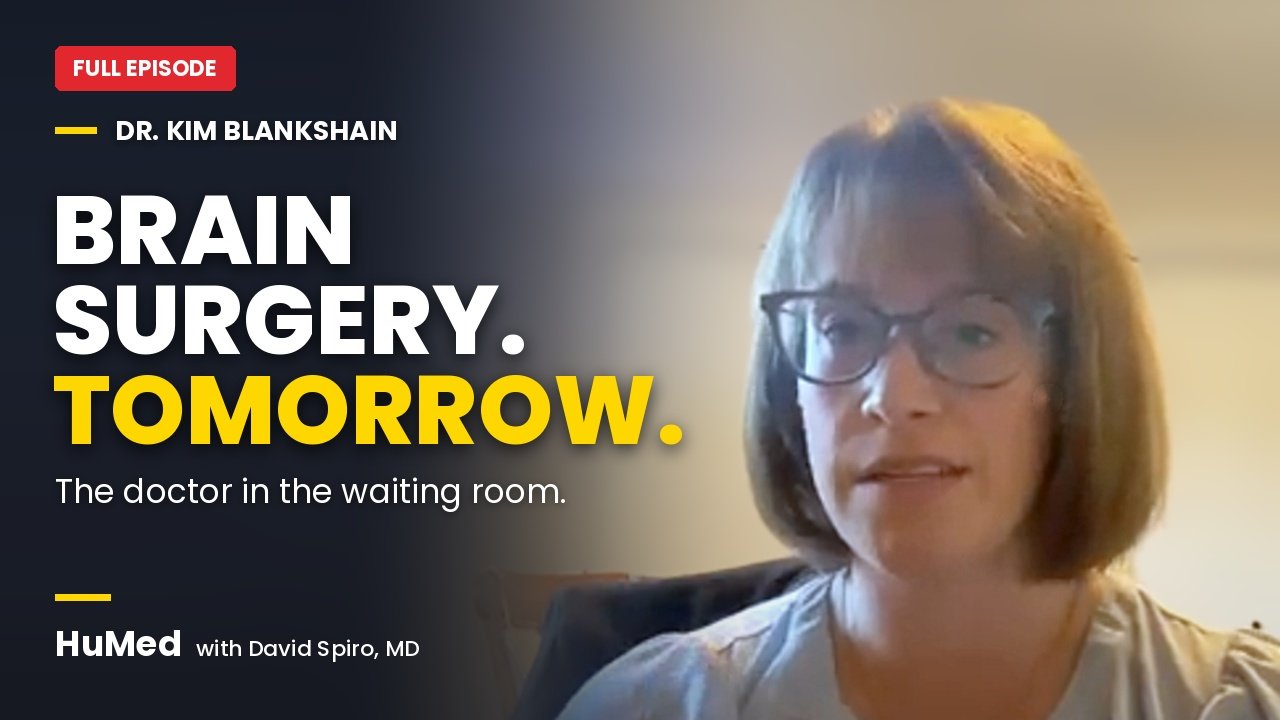
Kim Blankshain is a neuro-ophthalmologist in the western suburbs of Chicago. She takes care of vision problems that start in the brain and nervous system, which means she is often the one telling a patient they need an MRI. She listens to the show, and she reached out because she had a story about the year she ended up on the other side of that conversation.
A few moments from behind the scenes:
She came to me. Kim reached out and asked to come on, which I think is really awesome. At the end I asked her why. She said the stories on the show are a reminder that we’re not alone.
I got Chicago sports into the first minute. She grew up in the Chicago suburbs, so the intro included a “Go Cubs and Bears.” She is also an avid reader and a gardener.
I asked a question I’m not sure I’ve ever asked on the show. I wanted to know what she and her husband do to keep their relationship strong, and I told her to let me know if it was too personal. She answered it straight. Becoming parents put a big strain on their relationship, they spent about a year in couples therapy, and out of it came TV-free Thursdays. Every Thursday after their son goes to bed: no TV, no phones. Sometimes they talk. Sometimes they play a board game.
I admitted my own phone problem. I told her I’m still struggling with checking things on my phone at night that I don’t need to be checking. I also told her that HuMed had let me be present with her for this conversation.
The story at the heart of the episode
It was a Monday morning in the spring of her fellowship year. She was working 60 to 70 hours a week and had a baby who was five or six months old. She was changing him when she heard a crash somewhere in the apartment. She called out to her husband and got no answer.
She found him sitting on the edge of the bed, bleeding from a gash in his forehead and a little out of it. He thought he had passed out. It was 6:45, and she was supposed to be out the door in ten minutes. She texted her attending, dropped her son at daycare, and took her husband to urgent care and then to the ER, figuring he needed a few stitches.
Then the ER physician came in and said the CT scan was back and they were sending him downtown to see neurosurgery and get an MRI right away. “And I was like, what is happening?” The team had thought about airlifting him. He went by ambulance to Rush.
The MRI showed an epidermoid cyst in the cerebellopontine angle, large enough to be shifting his brainstem. Her husband, a software developer, stayed calm. Kim did not. She asked question after question until the neurosurgeon finally asked what she did for a living. She told him she was a neuro-ophthalmology fellow at the hospital down the street. His answer: “This all makes a lot more sense now.”
Surgery was first thing the next morning. She was told four to six hours. At about three hours, the hospital buzzer told her the surgeon wanted to see her in a consult room. She said most people outside medicine would take that as good news. Her own thought was, “It’s only been three hours. That can’t be good.” It was good. The surgeon told her it had come out easier than expected.
Why this is the human side of medicine
That was four years ago, and her husband is fine. What stayed with me is what Kim said about a good outcome. The recovery was about six hard weeks, with vertigo, hearing loss in one ear, and bad headaches. She went back to work the day after he came home, with a baby, and with her parents coming to the apartment to sit with him those first few days. For weeks she rode the L train to work in a daze.
It changed how she delivers hard news. Even with her training, and even after she’d had some time to think, she wasn’t really hearing what the neurosurgeon was saying. He repeated himself several times, and she appreciated it. So now she slows down. She says things more than once, in different ways. And she lets there be silence, which she called one of the hardest things: to deliver bad news and then pause. I told her that’s what I’ve learned in the pediatric ER too. You take space and let the family process.
We also talked about what medicine asks of the people in it. The six weeks she took when her son was born were all the time off she had for the year. Her fellowship director told her to do what she had to do, but there was only so much he could give. She pointed out the irony. We would never tell a patient that’s enough time to recover, “but we do it to ourselves all the time.”
One line to take with you
What Kim tells the pre-med students who spend time with her: “Even though I think what we do is one of the greatest things you can do with your life, it’s still just a job.”
Watch the full conversation on YouTube, or listen on Apple Podcasts or Spotify.
David