
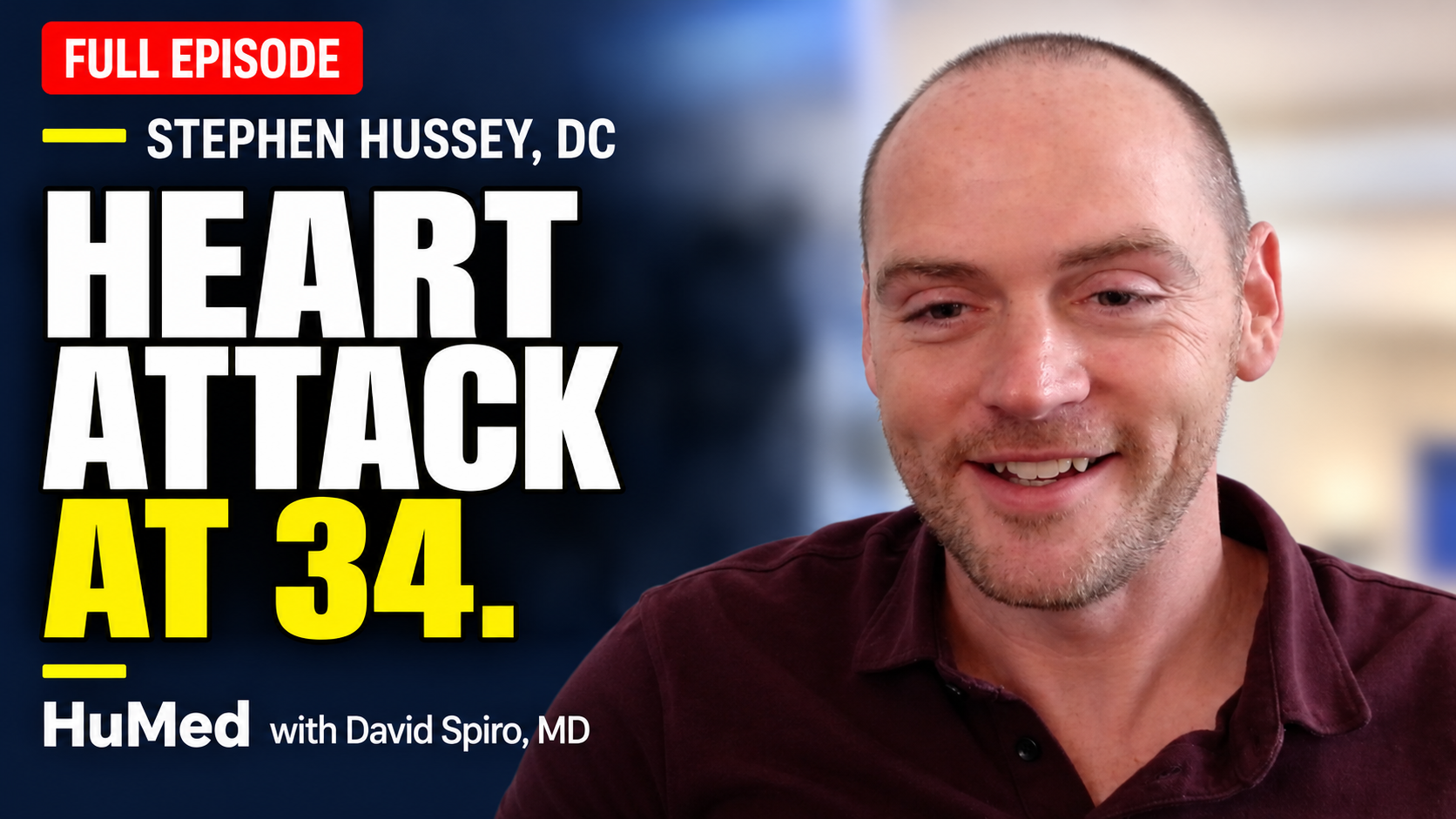
Stephen Hussey is a doctor of chiropractic with a master’s degree in functional medicine from the University of Western States in Portland, and the author of Understanding the Heart. He has lived with type 1 diabetes since he was nine. He ate well, exercised hard, kept his blood sugar under tight control and had a coronary calcium score of zero six months before a widowmaker heart attack at 34. This conversation is about what happened when a health professional landed on the other side of the curtain.
A few moments from behind the scenes:
He did a magic trick on camera. When Stephen was diagnosed with diabetes at nine, he spent a week in the hospital learning to care for himself and told his mom he felt like a pincushion. A nurse named Ken brought him a magic kit and taught him tricks. Decades later he still remembers one, and he performed it for me mid-interview: the detachable thumb. That nurse must have done a lot of beautiful things in his career.
His first reaction to the diagnosis was “cool.” When the doctor explained it, nine-year-old Stephen’s first thought was that he didn’t have to go back to school that day. Then he turned around and saw his mom crying. I see this all the time in the pediatric ER. Kids often take their cue from how their parents react. It’s one reason I hand out stickers, even to teenagers. They think it’s hysterical, and maybe ten years from now that’s what they’ll remember.
Common ground on sauna, not on umbrellas. I have a sauna at home and use it every day, and I follow Brian Johnson’s longevity journey with fascination. Stephen is a big believer in sweating too. Where he parts ways with Johnson is the umbrella he’s seen him carry to avoid the sun. Stephen wants more sunlight, not less.
The cat had a cameo. Right in the middle of describing his heart’s recovery, Stephen stopped to apologize. The cat had just knocked something off the table.
The story at the heart of the episode
By every measure Stephen was doing it right. A hemoglobin A1c around 6 to 6.5, which is very good control for someone with type 1. Low inflammatory markers. That calcium score of zero. The morning of the heart attack he did a hill-sprint workout, with push-ups and lunges to failure.
The two days before had been anything but calm. It was January, in the middle of COVID, and he had just heard very stressful news about a sibling living in another country whom no one in the family could get to. He didn’t sleep well for two nights. About thirty minutes after that workout, the pain started: the worst of his life, right in the center of his chest, getting worse and worse. Within five minutes he knew what it was. He was alone, called an ambulance and stayed awake through the entire cath, asking the team what they were doing. They found a 100 percent blockage of his LAD and no plaque anywhere else.
I asked what goes through your head in that moment. His answer was not what I expected:
“Can we make this stop? I got things to do.”
The only thought close to “this is it,” he said, was that they had life insurance, so his wife could pay off the house.
Why this is the human side of medicine
Stephen spent three days in a teaching hospital, alone because of COVID visitor restrictions, researching on his phone and asking every attending, resident and student who came through the same question: what happened here? He didn’t feel he got good answers. He asked about things outside the protocol, not expecting anyone to give them, just wanting to talk it through. By the end of his stay, he told me, he had been “branded as noncompliant” in his chart. The attending on discharge day said he wasn’t going to discuss medications because he knew how Stephen felt about them. Stephen’s reply: he actually wanted that doctor’s opinion.
I asked him the hard question too: with a sample size of one, how can he know whether his recovery came from his own approach, the stent or simply natural healing? He was candid. “The truth is I don’t know.” Whatever you make of his conclusions about heart disease, the part of his story that stays with me isn’t about cholesterol or sauna. It’s that a patient with medical training kept asking questions, and the conversation closed. Agreeing with a patient’s choices is optional. Staying in the conversation isn’t.
He was just as clear about the other side. He is completely grateful for emergency care. The ER, he said, has saved his life three times.
One line to take with you
I closed by asking what nearly dying at 34 changed about him. It sent him on a different path, he said. Once he started sharing his story online, he quickly found out how many people were in that exact same situation. “Now it’s become almost the best thing that’s ever happened to me.” If he can give someone sitting in the hospital asking why this happened “some answers, some clarity, some hope, some direction,” that’s what it’s all about for him.
Watch the full conversation on YouTube, or listen on Apple Podcasts.