
Behind the Mic with Dr. James Wittig: “I Was Hanging On by a Thread”
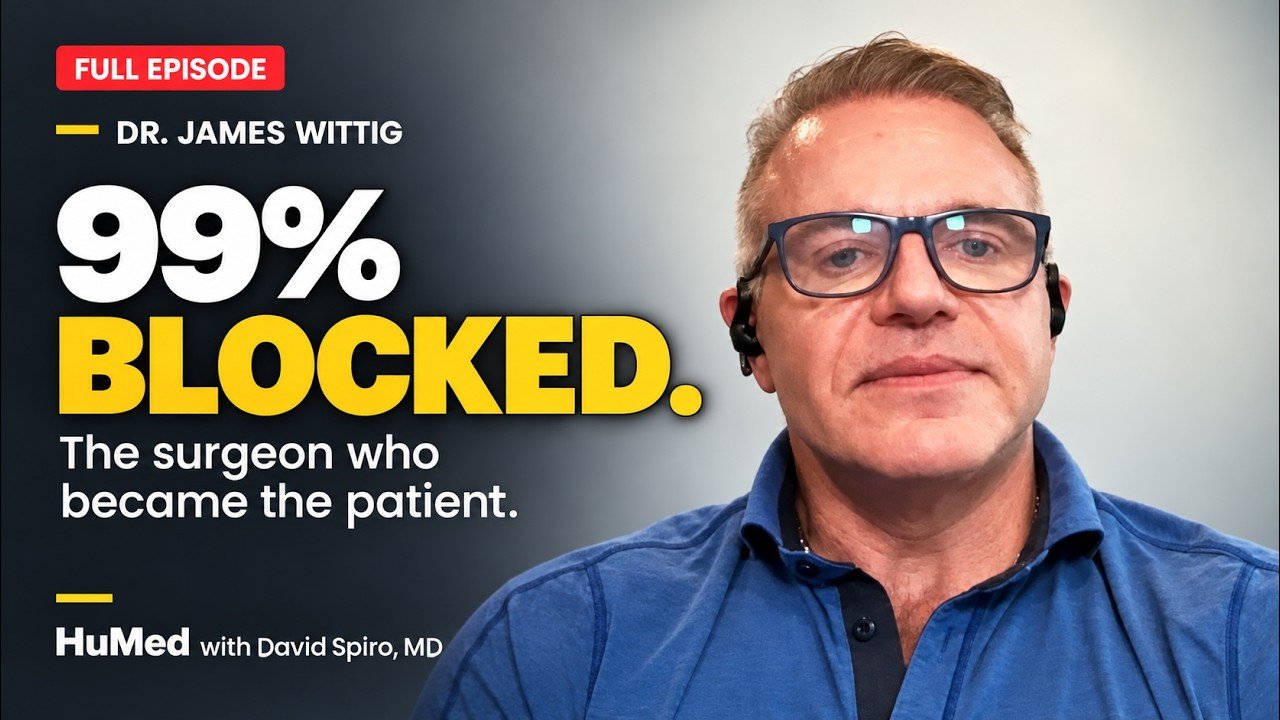
James Wittig and I met before we ever hit record. The story he told me then moved me so much that I asked him to share it on the show. He is an orthopedic oncologist who has spent more than 25 years saving the limbs of children and adults with bone and soft tissue cancers.
A few moments from behind the scenes:
He knew at two or three years old. James grew up in Paterson, New Jersey. His father was a police officer and his mother a hairdresser, and nobody in the family was a doctor. He remembers carrying a little black doctor bag, telling his aunts he was going to be a doctor and checking everybody’s blood pressure.
He asked to stay awake for his own heart procedure. He told the team to go easy on the propofol so he could wake up and watch. Once a surgeon, always a surgeon. What he saw, in his words, was like a wisp of hair going through the vessel.
We settled New York versus New Jersey. I grew up on Long Island, and I’m still upset that the Jets left Shea Stadium for the Meadowlands. I told James he’s all right anyway. More than all right.
The story at the heart of the episode
By his own count, James averaged no more than five hours of sleep a night for 30 years. In his last year of practice he did 700 orthopedic oncology surgeries while chairing a department of 120 orthopedic surgeons and directing a residency program he had started. Some days he was in the OR from seven in the morning until two the next morning. He loved the work and didn’t think of it as stress.
For reasons he still can’t explain, he asked his doctor for a test in March 2024. The CT scan of his heart showed a 70 percent blockage in his left anterior descending artery. He tried to cut back, and it wasn’t working. Then came about 180 hours of surgery in two weeks, and his kidneys failed. He resigned.
He spent the next year on diet, sleep, exercise and medication. Then chest pain on the treadmill started running down his arm. The catheterization found that same artery 99 percent blocked. During the procedure his blood pressure dropped and his heart went into a dangerous rhythm before the team got the vessel open. They put in three stents. “I was hanging on by a thread,” he said.
Why this is the human side of medicine
This is what HuMed is about. James spent his career making sure children with cancer kept their limbs and their lives, and by his own account he neglected his own health for about ten years to do it. I asked whether anyone ever told him it was too much. His answer: when the money’s coming in, it’s coming in.
He also named a trap doctors fall into. We go to doctors we know, and sometimes they downplay how serious things can be. His blood pressure ran high for years, and everybody had a reason it was fine. Looking back, he reached for the same word I had used: what he was doing “wasn’t human.”
He is 58 now. He gives himself eight hours of sleep a night, and he wants to be around for his son.
One line to take with you
James’s advice to his younger self: treat yourself well first, so you can be your best self for everybody else.
Watch the full conversation on YouTube, or listen on Apple Podcasts or Spotify.
David